Prepare
Update your computer and choose a private, unhurried place to begin.
YOUR COMPUTERA calm start to self-custody
A clear, beginner-friendly walkthrough for setting up the desktop app, connecting a hardware wallet, and finding your way around with confidence.
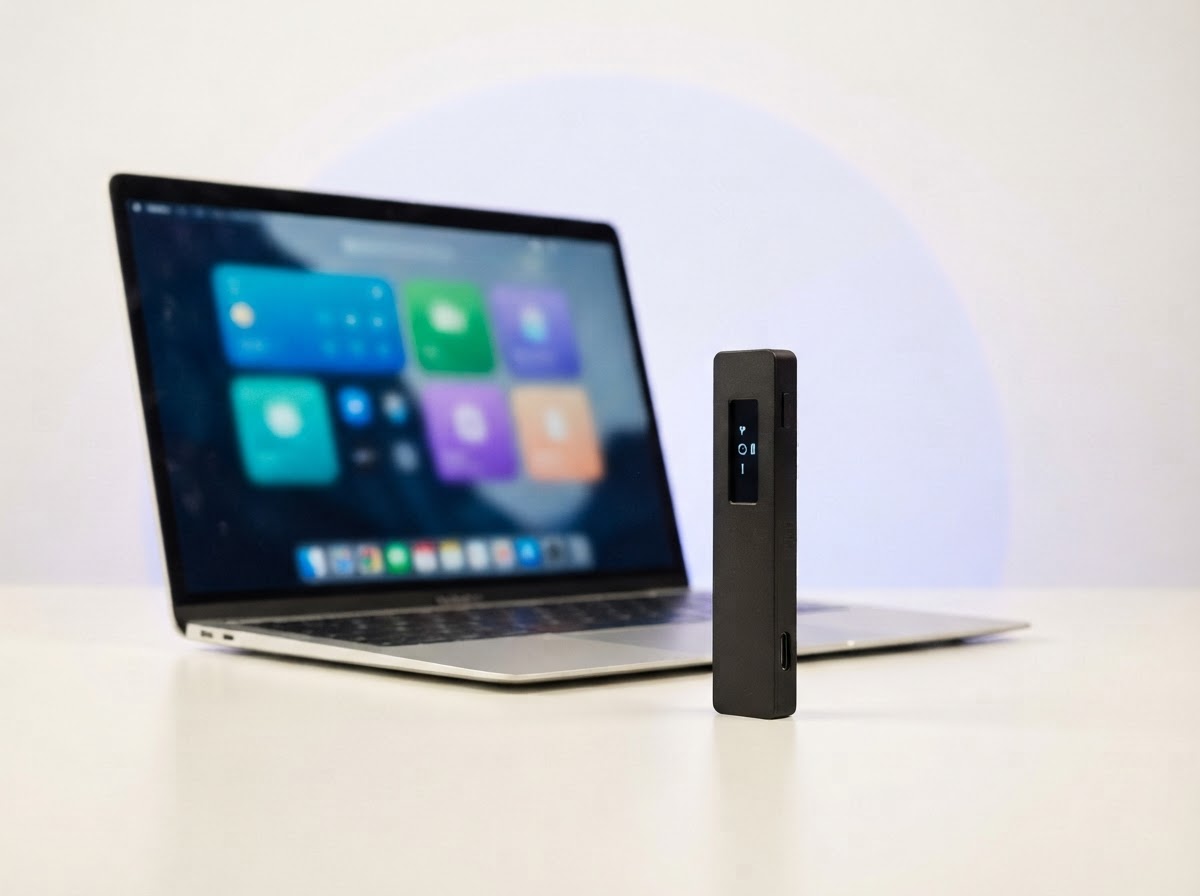
Ledger Live Desktop is companion software. Your hardware wallet is a separate device that you use to review and approve transactions.
↘YOUR LEARNING PATH
Move from computer prep to your final review, one clear idea at a time.
START HERE
Ledger Live Desktop is an application for using a Ledger hardware wallet from a computer. It helps you view supported accounts, check balances, review portfolio activity, and prepare certain transactions. Think of it as the dashboard; the hardware wallet is the separate device used to authorize supported actions.
The app offers a larger screen for navigating information, while the hardware wallet displays transaction details for you to verify. A displayed balance is an estimate, not a promise of value or a guarantee that a transaction can be reversed.
Keep the roles straight. Use the desktop app to view and prepare; confirm sensitive actions by carefully checking the information on your own device.
A QUICK PREP
Use a computer you control with an operating system that still receives security updates. Install pending updates, choose a trusted network, and close apps you do not need. On a shared computer, protect your account with a strong login and sign out when finished.
Find the desktop application by navigating to Ledger’s official website yourself and following its current download guidance. Avoid unsolicited links, attachments, sponsored lookalikes, and installers sent through messages. If a security tool warns you, pause and verify the source instead of bypassing it.
Keep your hardware wallet nearby and set aside a few uninterrupted minutes. You never need to share recovery words, a PIN, or private credentials to install or use the app. A request for them is a reason to stop.
FOLLOW THE FLOW
Use each stage as a checkpoint. Continue only when the details in front of you make sense.
Update your computer and choose a private, unhurried place to begin.
YOUR COMPUTERFind the application through Ledger’s official download instructions.
TRUSTED SOURCEConnect your device and follow the prompts shown in the app and on-device.
YOUR DEVICELearn where account details, balances, and activity appear in the interface.
THE DASHBOARDProtect your recovery phrase and keep approval decisions on your device.
SAFER HABITSPause to check the recipient, amount, and network before approving.
BEFORE YOU CONFIRMThere’s no prize for rushing. If something looks unfamiliar or unexpected, stop and consult the current official support guidance before proceeding.
YOUR DEVICE, YOUR DECISION
Open the application from your verified source and connect your hardware wallet using the method supported by your model. Follow the app’s instructions and read prompts on the device. You may need to unlock it with your PIN or open a relevant device app. Enter sensitive details only where the device itself directs you.
A connection prompt is not permission to approve everything. Compare the recipient, amount, and network on the hardware wallet with what you intended. If details differ or a request is unexpected, cancel and investigate. Never type your recovery phrase into a computer, website, chat, or support conversation to “synchronize” a wallet.
Available actions vary by asset, system, and device model. Use current instructions for your setup, not an outdated screenshot or tutorial.
A TOUR OF THE DASHBOARD
Notice the main areas of the interface. Accounts organize activity by supported asset or network; portfolio views summarize balances and recent changes, while account pages show more specific history. Labels and available actions vary by asset and app version.
Balance estimates can change with market prices, and activity may take time to update. Pending transactions or network delays can affect what appears. Use the portfolio as an overview, not a bank statement, tax report, or promise of future value.
Before a send, receive, swap, or other action, open its details and confirm the intended account and network. It is fine to explore read-only areas first and leave actions for another time.
THE MOST IMPORTANT HABIT
Your recovery phrase is the backup to your wallet. Keep it private, offline, and somewhere secure that you control. Never photograph it, store it in cloud storage, email it, or enter it into an app or website. Anyone who obtains it may be able to access associated assets.
Use a private PIN, keep software current, and be wary of urgent messages, remote-support requests, giveaways, or links asking you to connect a wallet. A familiar logo does not prove a request is genuine. Find support resources yourself instead of following unexpected instructions.
Before signing, read transaction details on the hardware wallet. If the recipient, amount, or network is unfamiliar—or a request appears unexpectedly—decline it and seek reliable guidance.
A ROUTINE, NOT A RACE
Updates may include interface changes, compatibility improvements, or security fixes. Check in the app or revisit Ledger’s official site directly. Know whether an update applies to the desktop app, operating system, or device firmware—these are different things.
Use a stable connection and follow prompts for your device and version. Do not unplug during an operation unless instructed. For update notices in unsolicited emails or pop-ups, ignore the link and verify the notice independently.
QUICK ANSWERS
Availability and steps can vary by model and software version.
See the final checklistNo. It is desktop software used with a separate hardware wallet. The app helps you view information and prepare actions; the device is where you review supported operations.
It depends on the action. Viewing previously added account information may not require a live connection, but adding accounts or approving transactions may. Follow prompts for your model and app version.
Estimates change with market prices, and network activity may take time to appear. Check account details and consult official support if an entry seems unfamiliar.
No. Never enter your recovery phrase into a computer, website, or message. Keep it private and offline; requests to share it are a serious warning sign.
Stop. Do not approve or follow unexpected links. Navigate independently to official support for current guidance.
YOUR LAST PAUSE
Tick each item as you confirm it, then use the list as a quick personal review.